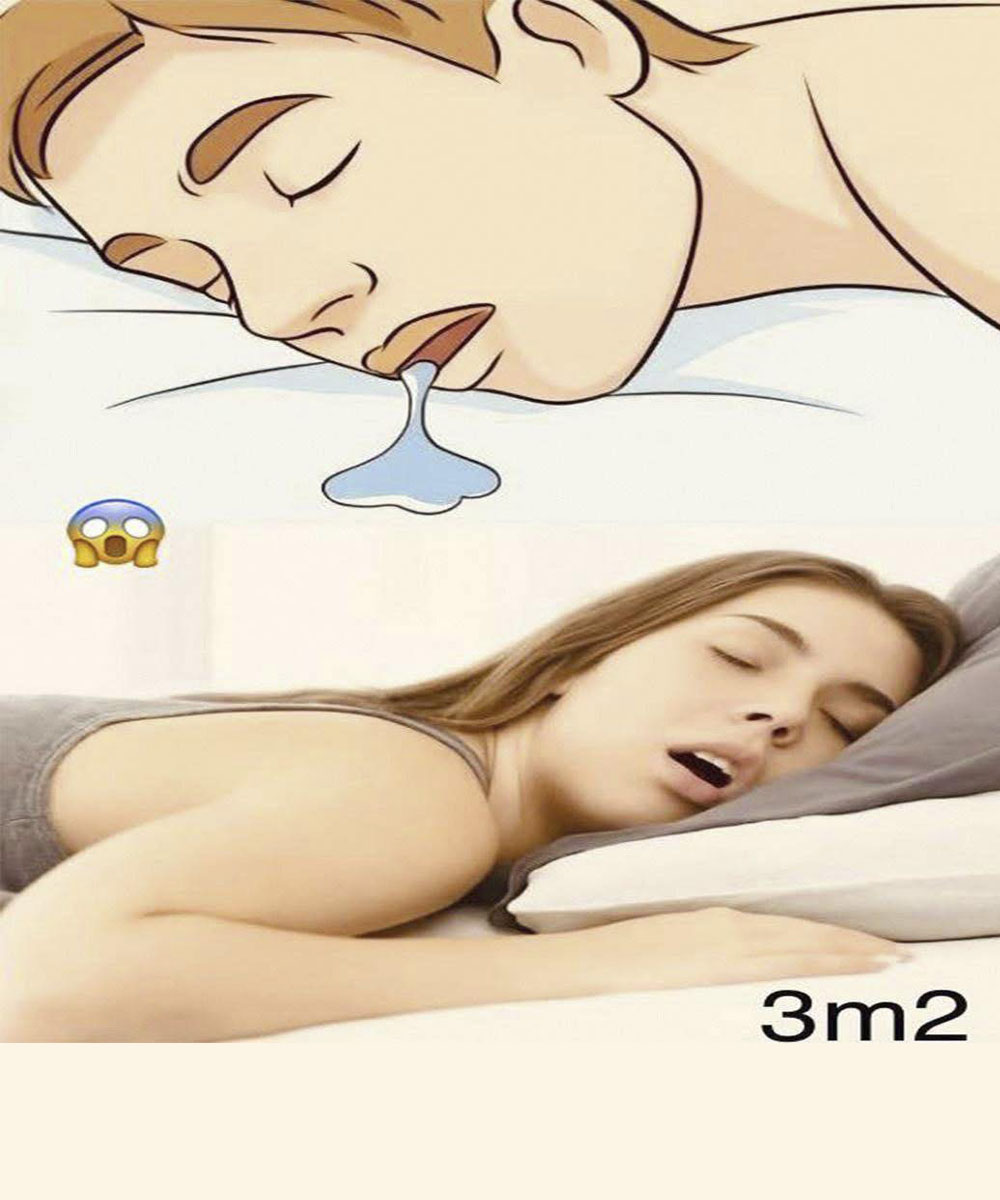
When you wake up and notice your pillow is damp, the first thing that usually comes to mind is a feeling of embarrassment or discomfort. However, drooling while sleeping is much more common than we think. It’s not a sign of carelessness or poor hygiene, but rather a reflection of what’s happening inside our body, and more specifically, our brain, while we rest.
Although it may seem trivial, this phenomenon reveals fascinating details about how our bodily functions work while we sleep and how our body maintains balance without us even realizing it.
Nighttime drooling, medically known as nocturnal sialorrhea, occurs when saliva production exceeds the mouth’s capacity to contain it. During the day, we swallow constantly, and our brain carefully regulates the amount of saliva we produce.
At night, however, this dynamic changes. The muscles of the mouth and face relax deeply during sleep, and this relaxation makes it easier for saliva to escape without us having any control over it. Furthermore, our sleeping position has a major impact. Sleeping on your stomach, for example, causes gravity to favor saliva flow, while sleeping on your side can also favor it depending on the tilt of your head.
The brain doesn’t stop while we sleep; in fact, it’s very active, alternating between different sleep phases: REM and non-REM.
