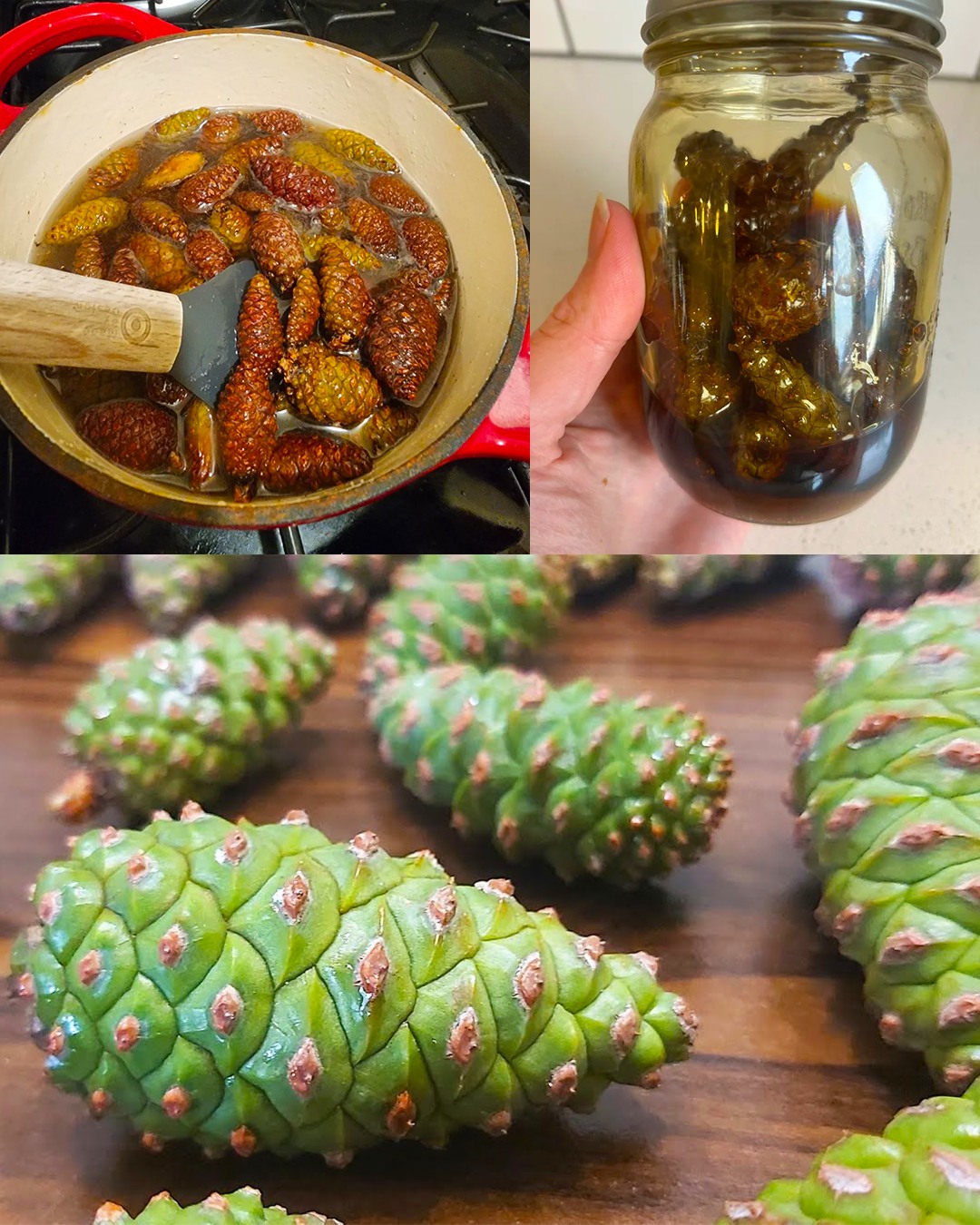
If you love old-world remedies with a gourmet twist, pine cone syrup is a gem. Made from young, green pine cones, this thick, amber syrup carries forest aromatics (hello, α-pinene and friends), a gentle resinous sweetness, and a long history in home kitchens for soothing throats and flavoring food. Below you’ll find a clear, step-by-step guide that any beginner can follow—plus benefits, storage tips, and lots of ways to use it.
What Is Pine Cone Syrup?
Pine cone syrup is a traditional, homemade syrup crafted from immature, soft pine cones (the kind you can slice with a knife or easily press with your fingers). The cones release fragrant compounds, mild bitterness, and natural color into sugar, creating a syrup that tastes like honey met the forest.
Important: Only use cones from true pines (genus Pinus). Do not confuse pine with yew (Taxus baccata, toxic) or with poison hemlock (a herbaceous plant, not a tree). If you’re unsure about identification, skip harvesting.
Potential Benefits (Traditional & Culinary)
Soothing for throat and cough
Traditionally sipped in warm water or tea to ease throat scratchiness and occasional cough.
Aromatics for easy breathing
Pine’s volatile compounds (like α-pinene) give that “clear the head” aroma many people love in steamy drinks.
Mild expectorant feel
Folk use suggests it can help loosen stubborn mucus when taken warm (e.g., stirred into hot water).
Comforting warm-up
A spoon in hot water or milk makes a calming, cozy nightcap.
Gentle digestive lift
The light bitterness can be helpful after heavy meals (taken in small amounts).
Mood & ritual
The foresty scent and slow ritual of making/using it can be grounding and pleasant.
Culinary superpower
A unique sweetener for desserts, glazes, salad dressings, cocktails, coffee, and tea.
Antioxidant notes
Pine plant parts contain polyphenols and vitamin C; your syrup won’t be a vitamin pill, but it does carry some plant goodness.
Not medical advice:
